
The rising dependence on discounted crude oil has resulted in India's trade deficit with Russia hitting the second-highest place last year, after China, reveals Department of Commerce data. From April through January 2022-23 (FY23), India's maximum trade deficit was with China, at $71.58 billion. This was followed by Russia, where the deficit expanded sevenfold - from $4.86 billion in April-January of 2021-22 (FY22) to $34.79 billion during the same period in FY23.

Import segments which recorded negative growth include gold, silver, transport equipment, coal, fertiliser, machinery and machine tools. However, exports of oil seeds, coffee, rice, tobacco, spices, pharma, and chemicals reported positive growth in June.

The windfall tax on oil produced within India and fuel exported overseas will make up for more than three-fourths of the revenue that the government lost when it cut excise duty on petrol and diesel to cool soaring inflation, industry sources said. India on July 1 joined a select league of nations globally that have taxed windfall gains accruing to oil companies from soaring energy prices. The government slapped a Rs 6 per litre tax on the export of petrol and jet fuel (ATF) and Rs 13 a litre on the export of diesel effective July 1. Additionally, a Rs 23,250 per tonne tax was levied on crude oil produced domestically.

The country's exports rose by 48.34 per cent to $32.5 billion on account of healthy growth in shipments of petroleum products, gems and jewellery, and chemicals, leather and marine goods, according to the data released by the Commerce Ministry on Thursday. Imports in June too rose by 98.31 per cent to $41.87 billion, leaving a trade deficit of $9.37 billion as against a trade surplus of $0.79 billion in the same month last year. During April-June 2021, the exports increased by 85.88 per cent to $95.39 billion.

A healthy growth in India's services segments has helped the country's total exports and imports of goods and services to cross the $800 billion mark during the first half of 2023, despite a slowdown in global demand, think tank GTRI said in a report on Monday. According to the analysis of the Global Trade Research Initiative (GTRI), exports of goods and services rose by 1.5 per cent to $385.4 billion during January-June this year, as against $379.5 billion in January-June 2022. Imports, however, dipped by 5.9 per cent to $415.5 billion during the six months of this year, as against $441.7 billion in January-June 2022.
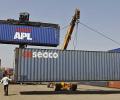
India's exports to China have increased by 16.15 per cent to USD 20.87 billion in 2020 from USD 17.9 billion in the previous year on account of healthy growth in the shipments of ores, iron and steel, aluminum and copper, according to the data of the commerce ministry.
India's exports rose by 43 per cent to $35.65 billion in October while trade deficit widened to $19.73 billion during the month, according to the official data released on Monday. Imports soared by 62.51 per cent to $55.37 billion, widening the trade deficit. Export sectors which recorded positive growth during October include petroleum, coffee, engineering goods, cotton yarn/fabs./made-ups, gems and jewellery, chemicals plastic and linoleum and marine products, the data showed.
Subdued demand from developed countries and blocs like the US and EU is impacting exports of key sectors including engineering, gems and jewellery and may have implications on India's exports in case the global situation does not improve in coming months. Global inflation, Russia-Ukraine war, simmering China-Taiwan crisis and supply disruptions are hurting economic growth worldwide, leading to poor demand, experts say. The world merchandise trade volume is expected to grow 3 per cent in 2022 against the earlier forecast of 4.7 per cent, mainly due to the ongoing war between Russia and Ukraine, according to the World Trade Organization forecast, released in April.
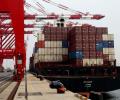
Imports increased by 4.5 per cent, the highest growth in the last six months as crude oil and gold shipments shot up in the month.
Imports also fell for the eighth consecutive months, down 0.75 per cent to $41.14 billion in January, widening the trade deficit to a seven-month high of $15.17 billion.
India's merchandise exports in October surged 42.33 per cent to $35.47 billion on the back of good performance by the engineering and petroleum sectors, as per provisional data released by the government on Monday. The exports stood at $24.92 billion in October 2020 and $26.23 billion in October 2019. "India's merchandise exports in October 2021 was $35.47 billion, an increase of 42.33 per cent over $24.92 billion in October 2020 and an increase of 35.21 per cent over $26.23 billion in October 2019," as per an official statement.

India's exports fell 5.12 per cent to $24.89 billion in October, after recording positive growth in September, on account of drop in shipments of petroleum products, gems and jewellery, leather and engineering goods, according to government data released on Friday. Trade deficit in October narrowed to $8.71 billion as against $11.75 billion in the corresponding month a year ago. Imports also fell 11.53 per cent to $33.6 billion (year-on-year) in October 2020.

India's exports fell for the fourth straight month in June as shipments of key segments like petroleum and textiles declined but the country's trade turned surplus for the first time in 18 years as imports dropped by a steeper 47.59 per cent.

Tehran plans to lift exports by 500,000 barrels per day
India's exports rose by 22.36 per cent to $33.81 billion in February on account of healthy growth in sectors like engineering, petroleum and chemicals, even as the trade deficit widened to $21.19 billion, according to preliminary data released by the commerce ministry on Wednesday. Imports during the month too jumped by about 35 per cent to $55 billion, with inbound shipments of petroleum and crude oil surging 66.56 per cent to $15 billion. The trade deficit -- the difference between imports and exports -- stood at $13.12 billion in February 2021.
Imports too contracted by 28.72 per cent to $31.16 billion. Dip in exports and imports narrowed the trade deficit -- the difference between imports and exports -- in March to $9.76 billion, the lowest in the last 13 months.

With nearly a quarter of U.S. energy shares' value wiped out by oil's six-month slide, investors are wondering if the sector has taken enough punishment and whether it is time to pile back in ahead of earnings reports later this month.

If they can sit together and hammer out 'Black Sea Initiative' deal for much needed food shipments, surely, they should be able to address the madness of the larger military conflict?

After contracting for six straight months, India's exports rose 5.99 per cent to $27.58 billion in September on account of growth in shipments of drugs and pharmaceuticals and readymade garments, as per the government data released on Thursday. Exports stood at $26.02 billion in September 2019. The country's imports contracted 19.6 per cent to $30.31 billion in September.
Economic recovery from the pandemic in the US has helped India achieve the $400-billion mark for exports for the first time in any fiscal year. According to the preliminary data compiled by the Department of Commerce, India exported goods worth $73 billion to the US from April 1 to March 21 - up 47 per cent, compared to last year. The US' share of exports, compared to total exports, stood at 18.2 per cent. The country is also India's largest trading partner and export destination.
Imports too declined by 16.31 per cent to $37.39 billion.

Out of 30 key export sectors, as many as 22 showed negative growth in September.
Imports too declined by 12.71 per cent to $38.11 billion in November, narrowing the trade deficit to $12.12 billion. Cumulatively, during April-November 2019, exports were down 1.99 per cent to $211.93 billion while imports contracted by 8.91 per cent to $318.78 billion.

Stocks of Indian companies with exposure to Europe fell on Tuesday amid concerns about the impact on their sales in case the Russia-Ukraine crisis worsens and the US and its allies impose economic sanctions on Russia. While top conglomerates, including Reliance Industries, the Tata group, and Aditya Birla Group, said they did not have any significant exposure to Russia, executives of some of the oil and gas, pharmaceutical, and tea companies said they were monitoring the situation closely as they earned substantial income from the region. Russian President Vladimir Putin on Monday ordered troops into two breakaway regions of eastern Ukraine after announcing that Russia would recognise their independence.
Overcoming its initial concerns, national reinsurer GIC Re has contributed to the formation of an insurance pool to cover most imports from Russia. While it will be called the fertiliser pool with a corpus of Rs 500 crore, it can be used to cover the risks of oil and gas imports too. This was decided by a clutch of Indian insurance companies, led by the state-owned ones. GIC Re's share is about 40 per cent in the pool. Last month, GIC Re had shot off a letter to all non-life insurance companies that underwrite marine risks not to ask it for reinsurance of cargoes that originate from Russia.
Export sectors that recorded positive growth in the last month include iron ore, electronic goods, spices, and marine products.

Taking a dig at China, Defence Minister Rajnath Singh on Sunday said 'some irresponsible nations' with their narrow partisan interests and hegemonic tendencies are coming up with wrong definitions of the UN Convention on the Law of the Sea.

A pregnant Sri Lankan woman, who had been in a queue for two days to obtain a passport to leave the crisis-hit country for employment overseas, went into labour while waiting for her turn on Thursday and delivered a baby girl.
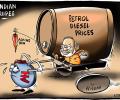
What could be more uncertain than Virat Kohli's agonising wait for a century for over two years? Perhaps it's what you will pay tomorrow morning to fill your vehicle's tank. Pump prices have joined cricket scores as the country's favourite discussion topic. Steep increases invite widespread protests, while moderate additions make the government anti-reformist. The ongoing fuel price conundrum is no different.
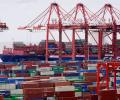
After staging a strong recovery from COVID-induced slowdown in 2021, India's exports are likely to extend the growth story to the New Year also on increased demand in the global markets, boost in domestic manufacturing due to production-linked incentive schemes and implementation of some interim trade pacts. Expectations of positive growth in the country's exports are also backed up by the outlook of the World Trade Organisation (WTO) which predicts a 4.7 per cent expansion in the global merchandise trade volume in 2022. Exporters believe that the outbound shipments would cross $400 billion mark in this fiscal going by the current momentum and may reach $475 billion in 2022-23.
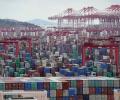
India's exports fell 9 per cent to $23.43 billion in November due to a drop in shipments of segments such as petroleum products, engineering and chemicals, even as the trade deficit narrowed to $9.96 billion during the month, according to official data released on Wednesday. Imports also slipped 13.33 per cent to $33.39 billion in the month under review. In November, oil imports dipped 43.34 per cent to $6.27 billion. It was down by 48.7 per cent to $44.10 billion during April-November 2020, the data showed. Exports during April-November 2020 were $173.49 billion, compared with $211.17 billion during the corresponding period a year ago, exhibiting a negative growth of 17.84 per cent.
Sectors, which, recorded healthy export growth included electronics, engineering, chemicals, pharma and tea.

Last month's deficit stood at $9.22 billion, the trade ministry said, compared with $10.56 billion in October -- a traditional gold buying season.

Finance Minister Nirmala Sitharaman on Thursday said inflation management cannot be "singularly" left to the monetary policy as a majority of activities are outside its purview in the current context. Speaking at a seminar organised by economic think-tank Icrier, the finance minister said that both the fiscal policy and the monetary policy have to work together to contain inflation. Consumer price index (CPI) based inflation or retail inflation is ruling above the Reserve Bank's comfort level of 6 per cent since January.

The agreement has ended a wartime standoff that had threatened food security in several countries and cleared the way for exporting tons of Ukrainian grains.

Cumulative exports during April-October 2017-18 increased by 9.62 per cent to $170.28 billion, while imports grew by 22.21 per cent to $256.43 billion, leaving a trade deficit of $86.14 billion.

Contraction in exports continued for the 12th month in a row in November as outward shipments shrank 24.43 per cent to $ 20.01 billion amid a global demand slowdown.
India's exports grew by 67.39 per cent to $32.21 billion in May driven by healthy growth in sectors such as engineering, pharmaceuticals, petroleum products and chemicals, according government data released on Wednesday. Exports in May last year stood at $19.24 billion and in May 2019 it was at $29.85 billion, the commerce ministry's preliminary data showed. Imports in May rose by 68.54 per cent to $38.53 billion, from $22.86 billion in May 2020. In May 2019, imports stood at $46.68 billion.
Contracting for the seventh month in a row, India's exports dipped by 15.82 per cent in June to $22.28 billion due to global slowdown and dip in crude oil prices that impacted shipments of petroleum products.
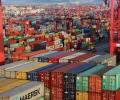
The country's exports jumped by 60.29 per cent to $34.45 billion in March even as the outbound shipments contracted by 7.26 per cent during the full 2020-21 fiscal to $290.63 billion. Imports too grew by 53.74 per cent to $48.38 billion in March, but dipped by 18 per cent to $389.18 billion during April-March 2020-21, according to the government data released on Thursday. Trade deficit during March 2021 widened to $13.93 billion from $9.98 billion in March 2020.
